


How to Choose the Best Digital Fabric Cutter for Your Projects
 Feb 05, 2026|
 View:2598
Are you looking for the best digital fabric cutter for your projects? There are many options to choose from, and picking the right digital fabric cutting machine for automotive applications is important. The market for these machines is very big, worth over USD 3625 million now, and it may almost double by 2035. When you select a fabric cutter, consider your project type, the kind of fabric you use, how often you cut, and the features you need. If you work in fashion or require a digital cutter for automotive needs, a digital fabric cutting machine can help you achieve clean results.
Key Takeaways
Think about what you need for your project before picking a digital fabric cutter. Decide what you want to make, like clothes or packaging.
Pick a cutter that works with the fabric you use. Some machines are better for certain materials. Some work better with thick or thin fabric.
Think about how much you will use the cutter. If you use it a lot, get a strong model. If you use it sometimes, a small cutter is fine.
Look for important features like how much it can cut, if it is easy to use, and if it is safe. These things make cutting easier and safer.
Read what other people say about different models. Reviews help you know what is good or bad about each cutter. This helps you choose the best one.
Define Your Project Needs
Project Types and Applications
Think about what you want to make before picking a digital fabric cutter. Are you making clothes, car seats, or special packaging? Each project might need a different machine. Here are some things people make with digital cutters:
Cutting PVC soft glass for covers or curtains
Shaping genuine leather for shoes or bags
Making cardboard patterns for packaging
Creating gaskets from PTFE-based or non-asbestos materials
There are different digital cutters, like laser cutters, vinyl cutters, and flatbed cutters. Laser cutters are good for textiles because they seal the edges. This helps stop fraying. When you know your project, you can choose the best tool.
Tip: Write down your main project types before shopping. This helps you know what you really need.
Fabric Types and Thickness
Fabrics are not all the same. Some are thick and strong. Others are thin and soft. You might use cotton, polyester, nylon, leather, or fleece. Here are some fabrics that work well with digital cutters:
Cotton
Polyester
Nylon
Leather
Fleece
Sailcloth
Kevlar
Sunbrella
Fabric thickness is important too. Some machines use high-frequency vibration knives. These can change the blade for different materials. Some cutters can cut at angles like 45°, 26°, or 16°. This helps with thick or layered fabric. If you use heavy materials, look for a cutter with a strong pneumatic knife and a long cutter stroke.
Feature | Description |
|---|---|
Cutting System | Pneumatic knife for thick, dense, or soft materials |
Cutter Stroke | 8mm stroke for better cutting power |
Cutting Angles | 45°, 26°, 16° for different fabric thicknesses |
Cutting Volume and Frequency
How often will you use your digital fabric cutter? If you have a big shop or factory, you may cut fabric every day. Smaller shops or hobbyists may use the machine only a few times a week. If you use your cutter a lot, pick a strong and reliable model.
How long your machine lasts depends on how much you use it and how you care for it.
With good care, a digital fabric cutter can last 7 to 10 years.
If you cut fabric often, choose a machine made for heavy use. If you cut fabric sometimes, a smaller or semi-automatic cutter may be enough.
Key Features in a Digital Fabric Cutter

When you look for a digital fabric cutter, you should know what makes each machine special. Let’s talk about the most important features for your projects.
Manual vs. Electric Options
There are two main types of fabric cutting machines. You can pick manual or electric. Each type has good points.
Manual cutters let you control your cuts. You can work with soft fabrics and make small shapes.
Electric cutters help you work faster. You can finish big jobs quickly. This is good for busy shops or factories.
Electric cutters can make your work about 40% faster than manual ones.
If you cut lots of fabric every day, an electric cutter saves time. If you like making small, detailed things, a manual cutter may be better for you.
Tip: Think about how much fabric you cut each day. If you cut a lot, electric cutters can help you keep up.
Cutting Capacity and Size
The size and power of your fabric cutter matter. You need a machine that fits your space and can handle your biggest projects.
Specification | Value |
|---|---|
Maximum cutting height | 3 cm (after compression) |
Effective cutting width | 180 - 225 cm (other widths available on request) |
Effective cutting length | 210 cm |
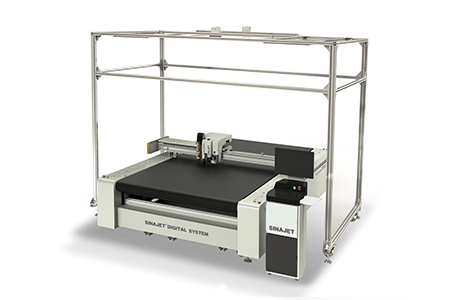
A bigger cutting area lets you use larger pieces of fabric. Automatic marker making and fabric spreading help you use your fabric better. New cutting machines, like the Sinajet Digital Cutter, work faster and make your job easier.
Accurate cutting helps you save fabric.
Good marker use lowers your costs.
Faster machines let you finish more projects.
Smart features, like AI, help you waste less fabric and get more from each roll.
Material Compatibility
Not every fabric cutter works with all materials. You need a cutter that matches your needs.
Some machines, like the Cricut Maker 3, can cut over 300 materials. You can cut almost any fabric, even without backing.
Others, like the AccuQuilt GO Big, let you cut many layers at once. You can use thick or thin fabrics, but you might need special dies.
New fabric cutters have different knife choices. The Sinajet Digital Cutter uses a fast circular knife. This blade works with many materials, like textiles and composites. You can switch between different knives for each project.
Note: Always check if your cutter works with the fabrics you use most. Some cutters are better for woven fabrics. Others work well with soft or layered materials.
Ease of Use and Safety
You want a fabric cutter that is easy to use and keeps you safe. Simple controls help you learn quickly.
Touch screens and easy software make cutting simple.
Clear buttons and smart design help beginners.
Safety is important too. Look for these things:
Comfortable design keeps you from getting tired.
Blade guards protect your hands.
Non-slip bases stop the machine from moving.
Cutting mats with grids help you line up fabric.
Safety locks and labels keep things neat.
Some advanced machines, like the Sinajet Digital Cutter, have anti-collision systems and sensors. These features help stop accidents and make your workspace safer.
Tip: Try the controls before you buy. A good cutter should feel easy and safe right away.
Advanced Features for Modern Projects
Modern fabric cutters do more than just cut. They have smart features that help you work better and faster.
Feature | Description |
|---|---|
Active Circular Knife | Fast spinning blade for many materials, helps you work faster. |
Multi-function machine head | Lets you cut, mill, and punch with one machine. |
Cutting speed | Up to 1200mm/s, depending on material and thickness. |
Cutting accuracy | ±0.1mm, so you get exact results every time. |
Safety devices | Has anti-collision and sensors for safe use. |
Material fixing method | Uses vacuum to hold fabric in place for perfect cuts. |
Energy saving is important too. Some machines, like the Sinajet Digital Cutter, use smart tech to use less power and save money. You get great results without wasting energy.
Remember: Pick features that match your projects. If you work with big, thick, or tough fabrics, choose a cutter with strong blades and smart fabric handling.
A digital fabric cutter with smart features helps you do more projects, save money, and stay safe at work.
Comparing Top Fabric Cutting Machines
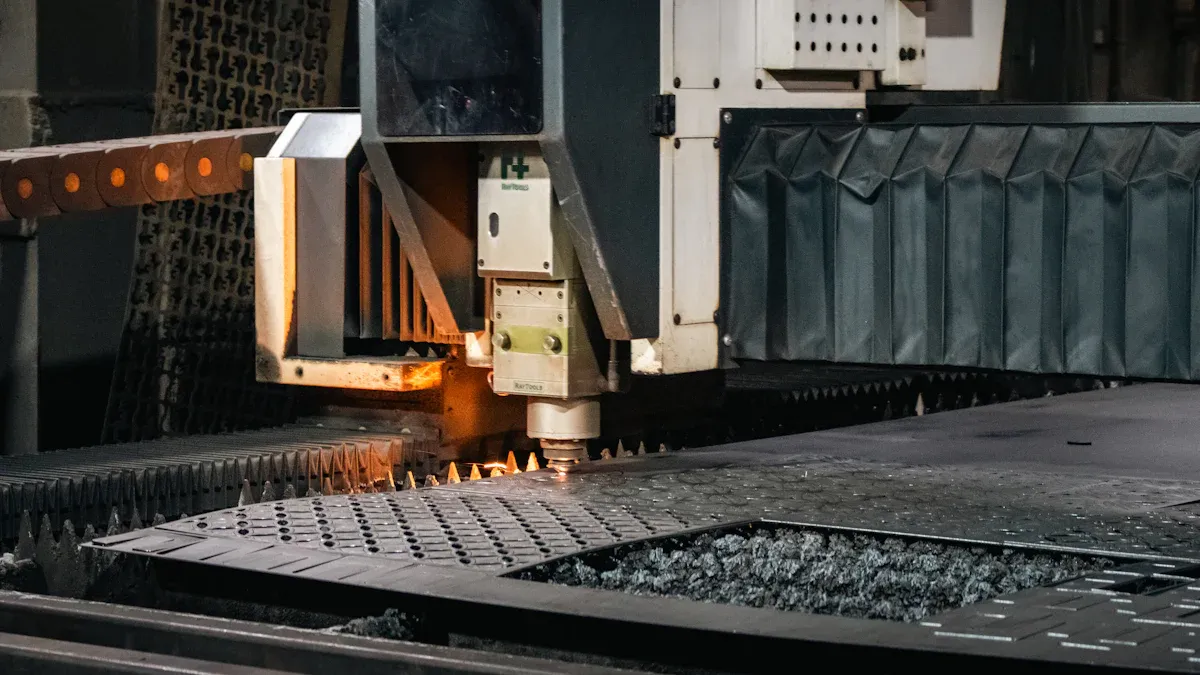
Leading Brands and Models
When you look for a fabric cutting machine, you will see many famous brands. Some of the top brands are:
USCutter (MH Series, SC2, Laserpoint)
Graphtec
Roland
Titan
PrismCut
Vulcan
Summa
Mimaki
Siser
There are also popular models with special features and good performance. Here are some favorites:
Model | Features |
|---|---|
Cricut Maker 3 | Cuts over 300 materials, adaptive tool system for different thicknesses |
AccuQuilt GO! Series | Cuts with precision, can cut up to 6 layers, good for beginners |
Pathfinder X-Calibre | Adjusts to fabric for better accuracy and speed |
Pathfinder M-Series | Can cut many layers at once |
Pathfinder Leather Nesting | Has new technology for cutting leather |
Strengths and Use Cases
Every fabric cutter has things it does best. For example, the Sinajet Digital Cutter can do UV spot varnishing and contour cutting in one step. This makes your work faster and helps you waste less material. You can use it for packaging, fancy prints, or textiles.
Some machines are best for big jobs. Multi-ply cutting machines and CNC textile cutters help you finish large orders quickly and accurately. If you make clothes, furniture, or medical items, these machines keep your cuts neat and your work fast.
Feature/Application | Description |
|---|---|
Multi-ply cutting machines | Good for making lots of things at once |
Laser, high-speed, and blade machines | Can be changed for different materials and speeds |
CNC textile cutting machines | Makes the same cut every time, even for hard patterns |
Apparel and clothing | Cuts with detail for special designs |
Upholstery and furniture | Works with thick and strong materials |
Pharmaceutical and medical | Focuses on safety and cutting exactly |
Home textiles and soft goods | Can cut many types of fabric |
Tip: Think about what you make most. Choose a machine that fits your daily work.
Price and Value
Fabric cutting machines can cost a little or a lot. Simple machines are cheaper, but big machines for factories cost more. Here is a quick price guide:
Model Description | Price Range |
|---|---|
Industrial Automatic CNC Fabric Cutting Machine | $20,000 - $30,000 |
High Speed Automatic Leather Cutting Machine | $7,500 - $12,000 |
Textile Industry Cutting Machine | $5,400 - $5,500 |
Automatic CNC Cloth Fabric Leather Cutting Machine | $8,000 - $8,400 |
Fabrics Cutter Multiple Layers Cutting Machine | $9,000 - $13,000 |
Industrial Textile Shredder Machine | $3,000 - $6,000 |
Gear-driven Intelligent CNC High-Precision Fabric Cutter | $850 - $900 |
Advanced Oscillating Knife Cutter | $16,500 |
Industrial Fabric Roll Cutter Machine | $19,560 |
Automatic High Efficiency Ultrasonic Cloth Cutting Machine | $12,730 - $15,523 |
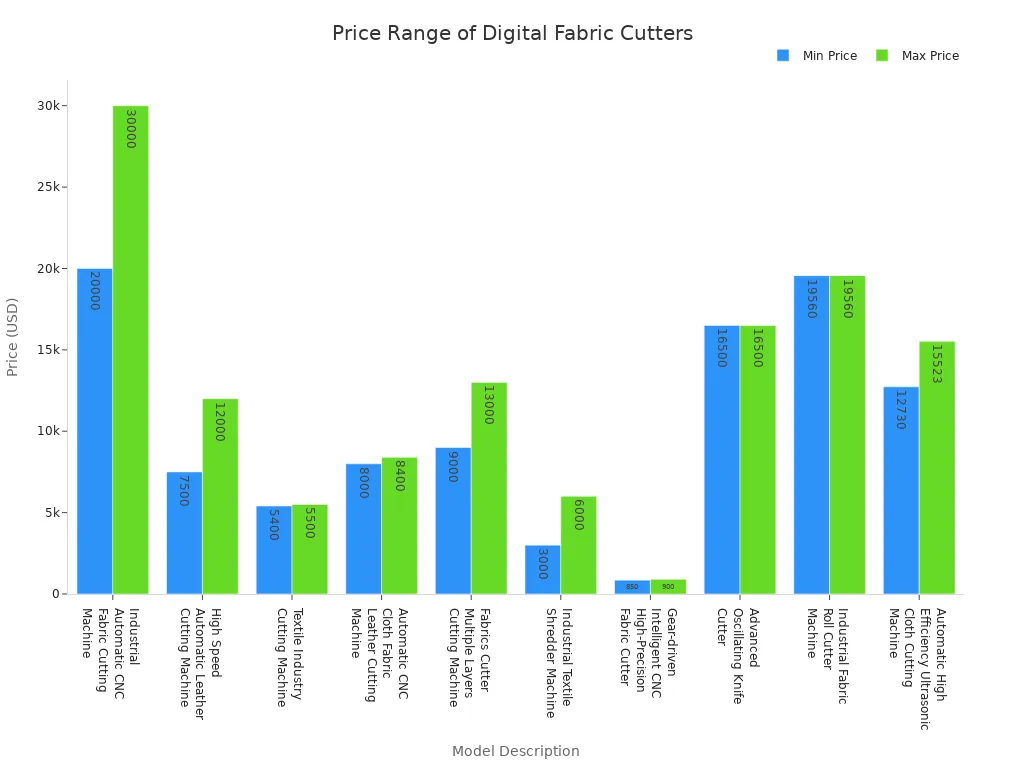
You get the best deal when you pick a machine that matches your needs. If you want smart features and lots of options, the Sinajet Digital Cutter gives you new technology and strong support.
Making the Right Choice
Setting a Budget
You want the best fabric cutter for your needs, but you also need to watch your wallet. Start by thinking about what you really need from your fabric cutting machine. Here are some tips to help you set a smart budget:
Check if the machine works with all the fabrics you use.
Make sure it can cut through the thickness you need.
Think about the size of the pieces you want to cut.
Balance what you want with what you can spend.
Don’t forget about the total cost. The price tag is just the beginning. You’ll also pay for things like maintenance, energy, and new blades. These costs add up over time and can change how much you really spend. Look for machines that use less power and need less fixing. This will save you money in the long run.
Maintenance and service: You may need spare parts or service contracts.
Energy use: Some machines use more electricity than others.
Consumables: Blades and filters need replacing.
Tip: Write down all the costs before you buy. This helps you avoid surprises later.
Reading Reviews and User Feedback
Before you buy a fabric cutting machine, check what other people say. User reviews can show you what works and what doesn’t. Here’s a quick look at what people talk about most:
Theme | Description |
|---|---|
Versatility | Users love machines that handle many types of fabric and diy projects. |
Precision | Many people want clean, accurate cuts for sewing and quilting tips. |
Ease of Use | Simple controls and easy setup get lots of praise. |
Specific Features | Features like cutting without backing or stiffening are popular. |
Some reviews also mention problems. For example, a few users say the Cricut software can be unstable. If you see the same issue in many reviews, it might be a real problem. Always read both good and bad comments to get the full story.
Tips: Look for reviews from people who do projects like yours. Their advice can help you avoid mistakes.
Where to Buy
You have many choices when it comes to buying a fabric cutter. Pick a store or website that gives you good support and clear warranty terms. Here’s a table to help you compare:
Feature | Details |
|---|---|
Brand | STYLECNC |
Model | STO1625A |
Price Range | $14,500 - $17,800 |
Warranty | One-year limited (extended options for major parts) |
Money Back Guarantee | 30 days |
Support | Free lifetime technical support |
Payment Options | Online and offline |
Shipping | Global delivery |
Some stores offer longer warranties or local service centers. This can make repairs faster and easier. If you want extra peace of mind, choose a seller with a two-year warranty or a nearby support team.
Quilting tips: Ask about after-sales support before you buy. Good help can save you time and stress.
You want a digital fabric cutter that matches your projects and makes your work easier. Check out this table to see what matters most:
Feature | Why It Matters | How to Check |
|---|---|---|
Cutting force (≥350 gf) | Cuts thick or layered fabric | Test with your material |
Tracking accuracy | Keeps cuts precise (≤±0.15 mm) | Try a sample cut |
Minimum inside radius | Handles tricky curves | Use real fabric |
Sarah Lin, a pattern designer, switched machines and cut her work time by 92%. You can do the same! Try these steps: load your favorite fabric, run a test cut, and see how the cutter handles layers. Explore top brands like Sinajet or visit a store for a demo. You’ll find the right cutter for your needs!
FAQ
What is a digital fabric cutter and how does it work?
A digital fabric cutter uses smart technology to cut fabric with speed and precision. You load your design, place the fabric, and let the machine do the work. This tool helps you finish diy projects faster.
How do I choose the right fabric cutter for my needs?
Start by thinking about your main projects. Check if the fabric cutting machine works with your favorite materials. Look for tips from other users. Choosing a fabric cutter that matches your needs makes your work easier.
Can I use a digital fabric cutter for quilting and sewing?
Yes, you can use a digital fabric cutter for quilting and sewing. It cuts fabric shapes for patterns and blocks. Many machines offer quilting tips and help you create neat edges for your diy projects.
What safety tips should I follow when using a fabric cutting machine?
Always keep your hands away from the blade. Use safety guards and wear gloves if needed. Read the manual before you start. These tips help you stay safe while working with any fabric cutter.
Where can I find reviews or support for my fabric cutter?
You can find reviews online or ask in sewing groups. Many brands offer support on their websites. If you need help, check for guides, videos, or tips from other users who use the same fabric cutting machine.

I want to comment
Recommended Products
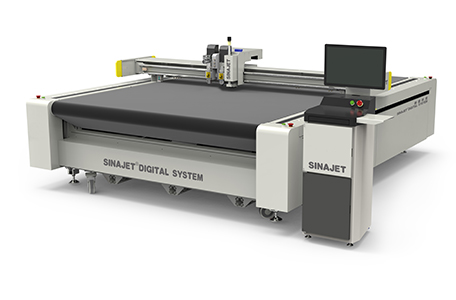
DG Series Flatbed Cutting Plotter
Vertical Inkjet Cutter Plotter
HP45 Inkjet Plotter
HP45 Inkjet Flatbed Cutter丨Digital Fabric Cutter

DF Series for Fast Printing, Graphic and Packaging
DH Rack and Pinion Series Digital Cutter

DG Digital Cardboard Cutter With Conveyor Table
DG/DH Series Digital Cutter
Digital Cutter With Scanning System


View More(Total0)Comment lists