


 Mar 16, 2026
 View:1451
In the fast-paced worlds of sign making, packaging, and textile design, the difference between a good business and a great one often comes down to finishing capability. For years, workshops have relied on manual labor or multiple specialized machines to bring rigid designs to life. However, the evolution of digital finishing has centralized around one crucial piece of equipment: the flatbed cutting plotter.
Unlike its roll-fed cousins that struggle with thick or rigid materials, a flatbed cutting plotter offers a stationary, vacuum-powered work surface that holds materials steady while a gantry moves cutting tools across the X and Y axes. This technology transforms how businesses handle prototypes, custom signage, and industrial components.
At Sinajet, we specialize in engineering these precise solutions. With years of experience in non-metal material cutting, our DG Series exemplifies how modern flatbed cutting plotter technology solves real-world production bottlenecks. This guide will walk you through everything you need to know about these versatile machines, ensuring you understand their value, functionality, and how they can streamline your operations.
Key Takeaways: The Essentials of Flatbed Cutting
Before diving into the technical details, here are the most critical points to understand about flatbed cutting plotter technology:
| Feature | Benefit | Why It Matters |
|---|---|---|
| Stationary Vacuum Table | Holds rigid and flexible materials flat without movement. | Enables extreme precision on materials like acrylic, cardboard, and composites. |
| Modular Tool Heads | One machine can cut, crease, kiss-cut, and mark. | Replaces multiple single-function devices, saving floor space and cost. |
| Industrial Precision | Accuracy up to ≤0.1mm (as seen in Sinajet DG Series). | Ensures complex interlocking designs fit perfectly without manual sanding. |
| Made-to-Measure (MTM) Ready | Software prevents overcutting and fiber drawing. | Essential for textile and apparel automation where fabric finish is critical. |
| High Thickness Capacity | Cuts materials up to 25mm or more thick. | Expands service offerings to include thick foams, gaskets, and packaging. |
What Is a Flatbed Cutting Plotter? Defining the Technology
A flatbed cutting plotter is a digital finishing device that uses computer-controlled blades to cut shapes from sheet materials. The defining characteristic is its flat work surface, typically embedded with a vacuum system that suctions the material down to prevent shifting.
How It Differs from Other Cutters
To fully grasp the value, it helps to contrast this machine with other common cutting technologies:
Vs. Roll-Fed Plotters: Standard vinyl cutters pull material through rollers. They are fast for flexible media but cannot handle rigid boards. A flatbed cutting plotter processes both flexible and rigid sheets with equal ease.
Vs. Laser Cutters: Lasers use heat to burn/vaporize material. While precise, they can scorch edges, create fumes, and are dangerous for PVC. A flatbed cutting plotter uses kinetic force (blades), resulting in clean, burn-free edges.
Vs. CNC Routers: Routers spin a bit to grind away material, which is great for thick woods and metals but noisy and messy. Flatbed cutting plotters are generally quieter and cleaner for thinner, non-metal materials.
Core Components Explained
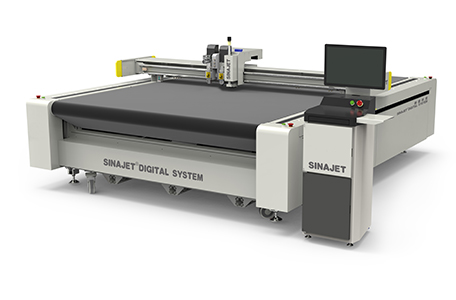
Understanding the anatomy of a flatbed cutting plotter helps in selecting the right model:
The Bed: A perfectly flat surface, often with a replaceable cutting mat or brush layer to protect blades.
Vacuum Zone: The system that holds the material in place. Different zone controls allow you to cover unused areas to maximize suction.
The Gantry & Head: The bridge that moves across the table. The tool head rides along this gantry.
Tooling: Interchangeable cartridges for different tasks (cutting, creasing, drawing).
The Sinajet DG Series: A Case Study in Precision
At Sinajet, we have engineered our DG Series Flatbed Cutting Plotter to address the specific pain points of modern manufacturers. When exploring the market, look for the features that the DG series exemplifies, as they represent the gold standard in flatbed cutting plotter design.
Unmatched Modularity for Diverse Materials
One of the most significant advantages of a modern flatbed cutting plotter is its ability to adapt. The DG Series supports high-speed circular knives, notch knives, and drills. This modularity means you can configure the machine for different fabric MTM (Made-to-Measure) requirements without needing multiple machines.
For Textiles: The circular knife ensures no fiber drawing, which is critical when cutting synthetic fabrics.
For Signage: The ability to add an inkjet model or pen allows the plotter to mark drill points or registration lines before cutting, combining layout and finishing in one step.
Intelligent Software Integration
Hardware is only half the battle. A true professional-grade flatbed cutting plotter is defined by its brain—the software. The DG Series utilizes powerful, personalized software that eliminates common production flaws like overcutting and the need for protective film. This software ensures that corners are crisp and that the blade lifts precisely at the right moment, which is particularly important for intricate packaging designs.
Technical Specifications That Matter
When evaluating a flatbed cutting plotter, the numbers tell the story of capability. The DG Series offers:
Cutting Speed: Up to 1700mm/s, ensuring high throughput.
Accuracy:≤0.1mm, guaranteeing that intricate parts fit together seamlessly.
Thickness: Up to 25mm, allowing for thick foams, gaskets, and multilayer cardboard processing.
Drive System: An imported intelligent digital servo control system ensures that the machine maintains consistent power and precision, even during complex curves.
Key Applications: Where the Flatbed Cutting Plotter Excels
The versatility of the flatbed cutting plotter is why it has become a staple across so many industries.
1. Packaging and Prototyping (The Speed-to-Market Advantage)
In packaging, speed is everything. Waiting for steel rule dies to create a prototype box can take weeks. A flatbed cutting plotter allows designers to create a digital file in the morning and have a physical prototype in their hands by the afternoon. The machine can crease and cut in a single pass, perfectly simulating the final folded product.
2. Industrial Textile and Composites
For industries like automotive or aerospace, cutting carbon fiber, Kevlar, or multi-layer fabric requires zero contamination and precise ply alignment. Because the material lies flat on the table and is held by vacuum, there is no distortion. The Sinajet DG Series excels here, offering cutting solutions that prevent fraying and maintain the integrity of high-tech fabrics.
3. Signage and Display
From rigid PVC for point-of-sale displays to aluminum composite panels for outdoor signage, a flatbed cutting plotter handles it all. Unlike routing, cutting these materials with a blade is faster and produces no dust or noise pollution, creating a better working environment.
4. Gaskets and Industrial Parts
For manufacturers who need custom rubber gaskets, foam seals, or silicone parts, the flatbed cutting plotter offers a just-in-time manufacturing solution. Instead of inventorying thousands of stamped parts, you can store the digital files and cut exactly what you need, when you need it.
Benefits of Investing in a High-Quality Flatbed System
Why should a business invest in a machine like the Sinajet DG Series? The return on investment comes from several key areas:
Waste Reduction: Nesting software optimizes part placement on the sheet, drastically reducing scrap material compared to manual cutting.
Labor Savings: One operator can manage a flatbed cutting plotter that does the work of three or four people cutting by hand.
Expanded Capabilities: Owning a flatbed system allows a shop to say "yes" to more jobs—thicker materials, complex shapes, and short-run production that would be unprofitable to outsource.
Consistency: Whether you cut one part or one hundred, every piece is identical. This consistency builds brand trust and quality assurance.
How to Choose the Right Flatbed Cutting Plotter
Selecting the right machine involves more than just looking at the price tag. Based on Sinajet's expertise, consider the following:
1. Material Throughput
What do you cut most often? If you primarily cut thin vinyl and paper, a lighter machine may suffice. However, if you cut thick corrugated board or plastic, you need the robust construction and powerful vacuum of a system like the DG Series.
2. Tool Compatibility
Will you need to crease as well as cut? Do you need to drill holes? Ensure the flatbed cutting plotter you choose supports the full range of tools you anticipate needing. The modular design of the Sinajet DG Series ensures it grows with your business.
3. Software Ecosystem
The machine must integrate seamlessly with your existing design software. Look for machines that accept standard file formats such as dxf, hpgl, and cut.
4. Physical Size
Measure your raw material sizes. The DG Series offers customizable lengths and widths, from compact 900x900mm units up to massive 12000x900mm configurations.
Frequently Asked Questions About Flatbed Cutting Plotters
Q1: What is the main difference between a vinyl cutter and a flatbed cutting plotter?
A: A vinyl cutter pulls material through the machine and is limited to flexible rolls. A flatbed cutting plotter holds the material stationary on a flat table, allowing it to cut rigid materials like board, plastic, and composite sheets, as well as fabrics and vinyl.
Q2: Can a flatbed cutting plotter cut fabric without fraying it?
A: Yes, provided it uses the correct tool. High-end machines like the Sinajet DG Series utilize a high-speed circular knife. This tool rotates as it moves, slicing the fabric cleanly without the up-and-down motion that causes fraying.
Q3: How thick of a material can a flatbed cutter handle?
A: This varies by model. Industrial models, such as the Sinajet DG Series, can handle materials up to 25mm thick.
Q4: Is it difficult to learn how to operate a flatbed cutting plotter?
A: Modern plotters are designed with user-friendliness in mind. With a background in basic design software, operators can typically learn the workflow within a few days.
Q5: Why is the vacuum table important?
A: The vacuum table is critical for precision. It holds the material perfectly flat and prevents it from shifting during the cutting process. Without a strong vacuum, intricate details would be misaligned.
Q6: Does Sinajet offer customized table sizes?
A: Yes. Sinajet understands that production spaces vary. Our DG Series offers customizable lengths and widths to meet specific industry needs.
Conclusion: The Future of Finishing is Flat
The manufacturing and creative industries are moving toward automation, precision, and flexibility. The flatbed cutting plotter stands at the center of this movement, offering businesses the power to bring complex designs to life with speed and accuracy that manual methods simply cannot match.
Whether you are in garment production, signage, packaging, or industrial composites, investing in a reliable flatbed cutting plotter is an investment in your company's future capability. By eliminating bottlenecks in the finishing stage, you free up your team to focus on what they do best: creating and selling.
At Sinajet, we are committed to providing these complete cutting solutions. Our DG Series embodies the perfect balance of power, precision, and modularity. We invite you to explore how a flatbed cutting plotter can transform your workflow, allowing you to take on more complex projects with the confidence that every cut will be perfect.
Ready to move your production into the flatbed era? Contact Sinajet today to discuss your specific cutting challenges and discover the perfect solution for your workshop.


View More(Total0)Comment lists